
Articolo: Inside the Fabric: Why Zawadi Hat Fashion Chooses Wax Cotton and Kikoi
Inside the Fabric: Why Zawadi Hat Fashion Chooses Wax Cotton and Kikoi
Plant-based fabrics all promise the same broad benefits: breathability, durability, a better story than synthetic alternatives. But which fabric a brand actually chooses, and why, says a lot more than the category itself. At Zawadi Hat Fashion , that choice comes down to two materials almost every piece is built from: wax cotton and kikoi.
Both are plant-based. Both are hand-cut in Kenya rather than mass-produced. And both were chosen for reasons that go back to how the brand started in the first place, not because they were on-trend, but because they were the fabrics our founders actually fell for.
Where It Started

Wangui and Maximilian met in Koh Phangan, Thailand, an unlikely place for a Kenyan fashion label to begin. Their story eventually brought them back to Kenya for a traditional Swahili wedding, and it was there, surrounded by kikoi and African print, that Maximilian, a German photographer by trade, first understood what these fabrics actually meant. Not as fashion. As identity, celebration, and craft, all woven into one length of cloth.
That moment is the reason Zawadi Hat Fashion exists. It's also why wax cotton and kikoi aren't just fabric choices for us, they're the whole point. Choosing plant-based fabric wasn't a separate decision from choosing wax cotton and kikoi specifically, it was built into it from day one. A few things follow naturally from that:
- Natural fibres, not petroleum-based ones: Wax cotton and kikoi are both plant-based, which means they biodegrade over time and don't shed the microplastics synthetic fabrics do with every wash.
- Hand-cut, not mass-manufactured: Every piece is cut by hand in Kenya, which keeps production small and intentional rather than run through high-waste industrial lines.
- Limited drops, not overproduction: We don't restock collections. Fabric is sourced for a specific run, used, and then the drop closes, so there's no leftover deadstock sitting in a warehouse.
- Support for local craft: Working with wax cotton and kikoi means working within Kenyan and East African textile traditions and the artisans who know these fabrics best, rather than outsourcing production to fast fashion supply chains.
None of this makes us a "sustainable brand" in the loudest sense of the word. It's simply what working with the right fabric, cut the right way, in limited quantity, actually looks like in practice.
What Makes Wax Cotton Worth Choosing

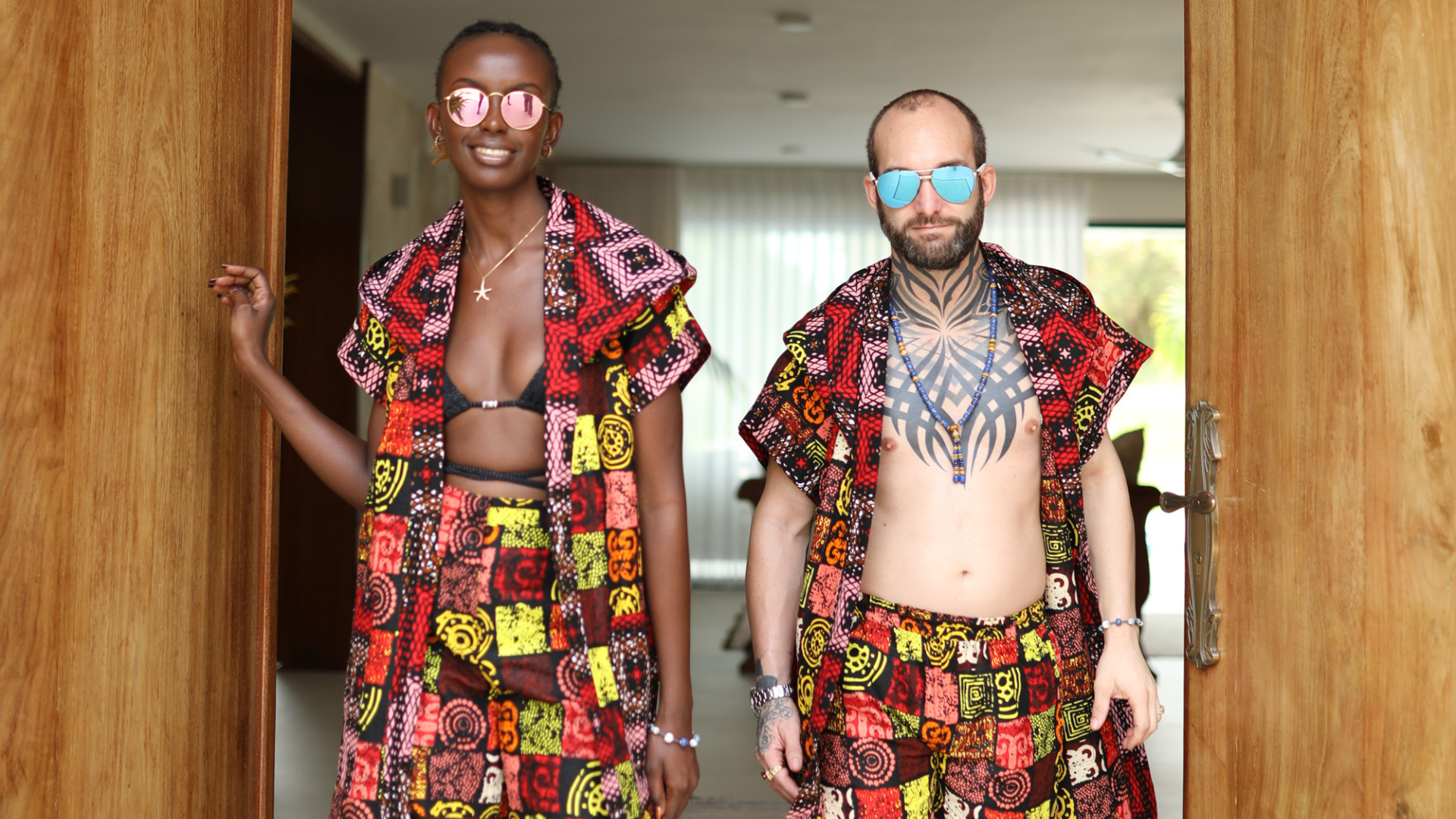
Wax cotton is a plant-based fabric through and through, made from 100% cotton and finished with a wax-resin dyeing process that gives it that unmistakable depth of color and pattern. A few things set it apart:
1. It's built for movement- Wax cotton has a slightly stiffer hand than plain cotton, which means it holds structure well in tailored pieces without losing the breathability plant fibres are known for.
2. The print goes deep, not just on top- Because of how the wax-resist dyeing process works, the pattern penetrates the fabric rather than sitting as a surface print, so the colour and design hold up wash after wash.
3. It's genuinely durable- This is a fabric meant to travel. It resists creasing better than plain cotton and softens gradually with wear, rather than wearing thin.
Why Kikoi Earns Its Place Too

Kikoi is a different fabric with a different job. Traditionally worn along the East African coast, it's a lighter, more open weave, usually cotton, sometimes blended, designed specifically for heat.
We use kikoi where wax cotton would be too structured: resort pieces, layering fabric, anything meant to move with the body in hot, humid conditions. It's soft from the first wear rather than needing to be broken in, and it carries its own kind of print heritage, stripes and bands rather than wax-dyed motifs, that ties directly back to the coastal Swahili culture where the founders' story took root.
Two Fabrics, One Philosophy
Wax cotton and kikoi solve different problems, structure versus ease, statement versus simplicity, but they share the same foundation. Both are plant-based. Both are hand-cut in Kenya, not mass-produced. And both are sourced with an eye toward what actually wears well over a lifetime of travel, not just what photographs well once.
That's really the throughline for Zawadi Hat Fashion as a brand. We were built around a pair, a couple, two different backgrounds meeting in one place, and that same idea shows up in how we choose fabric: two very different materials, chosen deliberately, working together toward the same purpose.
Limited by Design

Because every piece is hand-cut rather than mass-manufactured, we don't restock collections once they're gone. Drops like Ocean Teal, Spice Mix, and Mandala Bloom exist as they are, in the fabric quantities we sourced, and then they're done.
It's a more deliberate way of working, and it's also simply how natural, hand-finished fabric like this has to be treated. You can't mass-produce something this specific without losing what makes it worth wearing in the first place.
The Bottom Line
Wax cotton and kikoi aren't chosen for trend cycles. They're chosen because they carry the story the brand was built on, and because, fabric for fabric, they hold up to the kind of life our pieces are actually meant for: airports, coastlines, warm evenings, and the wear that comes with actually living in your clothes rather than just owning them.
If you're building a wardrobe around fabric that means something, explore the current collection while it's still available. Once a drop is gone, it's gone.

Commenta
Questo sito è protetto da hCaptcha e applica le Norme sulla privacy e i Termini di servizio di hCaptcha.